

Why Is Port Alberni Called the Worst Place to Live, and Is That Fair?

Why is port alberni the worst place to live is a search phrase that says more about Port Alberni’s reputation than it does about whether you could actually live well there.
Port Alberni has real weaknesses, but the label is too crude to describe a regional service centre with a working waterfront, hospital care and very different neighbourhood settings.
I would rather start there than pretend the choice can be reduced to a ranking. A place works because its daily compromises fit your life, not because somebody else gave it a score.
For a relocation decision, the useful details are ordinary ones. Where you shop. Where you get medical care. What happens when the road closes. How much property you want to maintain. How easily family can reach you. Those questions become more important after the novelty of the move wears off.
KEY TAKEAWAYS
- Statistics Canada reported a Crime Severity Index of 175.96 for the City of Port Alberni in 2021, compared with 92.86 for British Columbia.
1 • Statistics Canada reported median after tax income of $44,640 in Port Alberni in 2020, compared with $66,800 across Canada. 1 • West Coast General Hospital has an emergency department that operates 24 hours a day. 2 • Highway 4 closed at Cameron Lake Bluff on June 6, 2023, and reopened to single lane alternating traffic on June 23, 2023.
3
Where the reputation comes from
This is where I separate a place you enjoy visiting from a place you can run a normal week. A visitor can tolerate inconvenience because the trip has an end date. A resident has prescriptions to collect, food to buy, appointments to keep and people who may need help on short notice.
Housing matters because it determines what remains in the monthly budget after the move. But a lower purchase price is not automatically a lower cost of living. Driving, maintenance, insurance, utilities and the need to travel for services can move the total in the other direction.
I would also pay attention to the difference between inconvenience and fragility. Inconvenience means a trip takes longer. Fragility means a single road, service or piece of infrastructure can interrupt the plan entirely. The west side of Vancouver Island has examples of both.
Crime is a real part of the discussion
The Pacific Rim also punishes lazy comparisons. Communities that look close on a map can have very different service levels, housing choices and exposure to road disruption. I would compare the actual routine, not the postcard version of the geography.
That becomes especially important if the plan is to stay for a long time. A property that works while you are happy to drive everywhere may become inconvenient if driving becomes difficult. The safest choice is usually the one that still works when you are less interested in managing a complicated property or making unnecessary trips.
None of this makes the region a poor choice. It makes it a choice that rewards people who understand the logistics. If the landscape and pace of life matter enough, the extra planning may be easy to accept. If easy access is the priority, the same planning can become tiring.
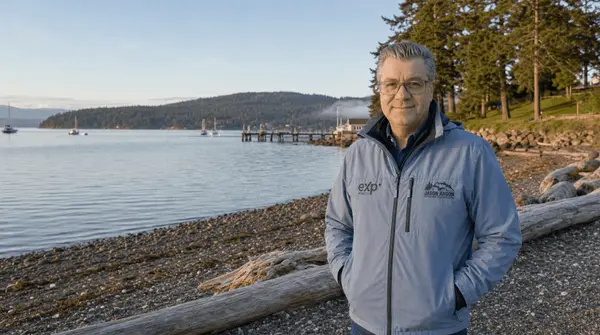
The working waterfront changes the first impression
Housing matters because it determines what remains in the monthly budget after the move. But a lower purchase price is not automatically a lower cost of living. Driving, maintenance, insurance, utilities and the need to travel for services can move the total in the other direction.
Family access belongs in the same calculation. A place can feel close when everyone is healthy and schedules are flexible. It feels farther away when a ferry is missed, a highway closes or somebody needs you there at a particular time.
The best test is to imagine an ordinary wet Tuesday rather than a summer weekend. Think about groceries, a medical appointment, a family call, a repair at the house and a trip that cannot be postponed. If the location still makes sense on that day, the comparison is becoming useful.
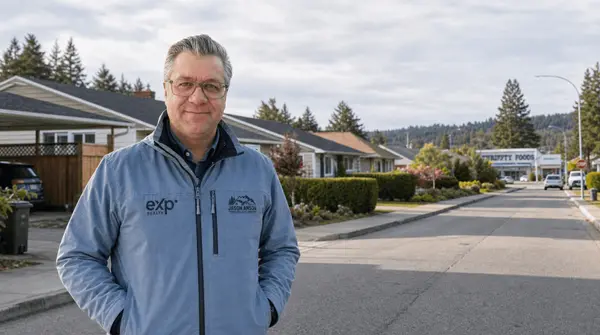
Daily services make Port Alberni more self contained
That becomes especially important if the plan is to stay for a long time. A property that works while you are happy to drive everywhere may become inconvenient if driving becomes difficult. The safest choice is usually the one that still works when you are less interested in managing a complicated property or making unnecessary trips.
I would also pay attention to the difference between inconvenience and fragility. Inconvenience means a trip takes longer. Fragility means a single road, service or piece of infrastructure can interrupt the plan entirely. The west side of Vancouver Island has examples of both.
This is where I separate a place you enjoy visiting from a place you can run a normal week. A visitor can tolerate inconvenience because the trip has an end date. A resident has prescriptions to collect, food to buy, appointments to keep and people who may need help on short notice.
Highway 4 is the trade you cannot ignore
Family access belongs in the same calculation. A place can feel close when everyone is healthy and schedules are flexible. It feels farther away when a ferry is missed, a highway closes or somebody needs you there at a particular time.
None of this makes the region a poor choice. It makes it a choice that rewards people who understand the logistics. If the landscape and pace of life matter enough, the extra planning may be easy to accept. If easy access is the priority, the same planning can become tiring.
The Pacific Rim also punishes lazy comparisons. Communities that look close on a map can have very different service levels, housing choices and exposure to road disruption. I would compare the actual routine, not the postcard version of the geography.
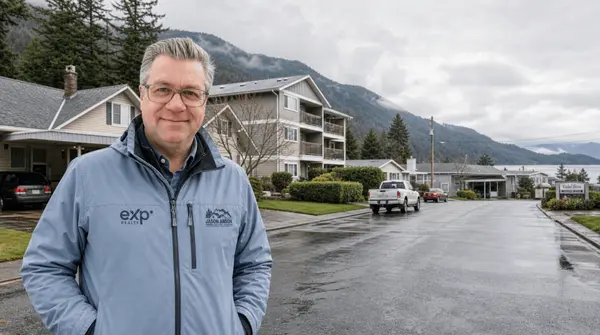
Neighbourhood choice matters more than the label
I would also pay attention to the difference between inconvenience and fragility. Inconvenience means a trip takes longer. Fragility means a single road, service or piece of infrastructure can interrupt the plan entirely. The west side of Vancouver Island has examples of both.
The best test is to imagine an ordinary wet Tuesday rather than a summer weekend. Think about groceries, a medical appointment, a family call, a repair at the house and a trip that cannot be postponed. If the location still makes sense on that day, the comparison is becoming useful.
Housing matters because it determines what remains in the monthly budget after the move. But a lower purchase price is not automatically a lower cost of living. Driving, maintenance, insurance, utilities and the need to travel for services can move the total in the other direction.
Retirement makes practical access more important
None of this makes the region a poor choice. It makes it a choice that rewards people who understand the logistics. If the landscape and pace of life matter enough, the extra planning may be easy to accept. If easy access is the priority, the same planning can become tiring.
This is where I separate a place you enjoy visiting from a place you can run a normal week. A visitor can tolerate inconvenience because the trip has an end date. A resident has prescriptions to collect, food to buy, appointments to keep and people who may need help on short notice.
That becomes especially important if the plan is to stay for a long time. A property that works while you are happy to drive everywhere may become inconvenient if driving becomes difficult. The safest choice is usually the one that still works when you are less interested in managing a complicated property or making unnecessary trips.
The fair answer is more complicated than the reputation
The best test is to imagine an ordinary wet Tuesday rather than a summer weekend. Think about groceries, a medical appointment, a family call, a repair at the house and a trip that cannot be postponed. If the location still makes sense on that day, the comparison is becoming useful.
The Pacific Rim also punishes lazy comparisons. Communities that look close on a map can have very different service levels, housing choices and exposure to road disruption. I would compare the actual routine, not the postcard version of the geography.
Family access belongs in the same calculation. A place can feel close when everyone is healthy and schedules are flexible. It feels farther away when a ferry is missed, a highway closes or somebody needs you there at a particular time.
FAQ
Is Port Alberni really a bad place to live?
No single label describes the whole Alberni Valley. The crime figures deserve attention, but hospital access, neighbourhood choice, local services and your tolerance for Highway 4 matter just as much.
Is Port Alberni isolated from the rest of Vancouver Island?
It has a full regional service role, so many daily needs can be handled locally. The weak point is Highway 4, which is the main road connection to the east side and has experienced significant closures. 3
Does Port Alberni work for retirement?
It can if the property and neighbourhood keep daily needs manageable. I would put hospital access, future driving needs and family travel ahead of the community’s online reputation.
SOURCES
1 Statistics Canada, 2023, Statistical Snapshot of Port Alberni, using 2021 Census and police reported crime data. 2 Island Health, 2026, West Coast General Hospital service information. 3 Province of British Columbia, 2023, Highway 4 Cameron Lake Bluff closure and reopening notices.
Categories
- All Blogs (208)
- BC Property Tax Search (10)
- Cost of Living in the Cowichan Valley (3)
- Cost of Living in the Pacific Rim (3)
- Cost of Living on Central Vancouver Island (3)
- Cost of Living on Cowichan Lake (3)
- Cost of Living on North Vancouver Island (3)
- Cost of Living on South Vancouver Island (3)
- Cost of Living on the Gulf Islands (3)
- Cost of Living on the Surrounding Islands (3)
- Cost of Living on Vancouver Island (5)
- Living in the Cowichan Valley (3)
- Living in the Pacific Rim (3)
- Living in Youbou (3)
- Living on Central Vancouver Island (3)
- Living on Cowichan Lake (3)
- Living on North Vancouver Island (3)
- Living on South Vancouver Island (3)
- Living on the Gulf Islands (3)
- Living on the Surrounding Islands (3)
- Living on Vancouver Island (26)
- Log Homes (3)
- Most Affordable Central Vancouver Island (3)
- Most Affordable Comox Valley (1)
- Most Affordable Cowichan Valley (1)
- Most Affordable Gulf Islands (3)
- Most Affordable in Campbell River (1)
- Most Affordable Nanaimo (1)
- Most Affordable North Island (1)
- Most Affordable North Vancouver Island (3)
- Most Affordable Pacific Rim (3)
- Most Affordable Parksville Qualicum (1)
- Most Affordable South Vancouver Island (3)
- Most Affordable Surrounding Islands (4)
- Most Affordable Vancouver Island (4)
- Most Expensive Campbell River (1)
- Most Expensive Central Vancouver Island (3)
- Most Expensive Comox Valley (1)
- Most Expensive Cowichan Valley (1)
- Most Expensive Gulf Islands (3)
- Most Expensive Nanaimo (1)
- Most Expensive North Island (1)
- Most Expensive North Vancouver Island (3)
- Most Expensive Pacific Rim (3)
- Most Expensive Parksville Qualicum (1)
- Most Expensive Port Alberni Area (2)
- Most Expensive South Vancouver Island (3)
- Most Expensive Surrounding Islands (4)
- Most Expensive Vancouver Island (4)
- Moving to Central Vancouver Island (3)
- Moving to Cowichan Lake Area (3)
- Moving to Cowichan Valley (3)
- Moving to North Vancouver Island (3)
- Moving to South Vancouver Island (3)
- Moving to the Gulf Islands (3)
- Moving to the Pacific Rim (3)
- Moving to the Surrounding Islands (3)
- Moving to Vancouver Island (3)
- People’s Choice Awards (11)
- Real Estate Market Guide (6)
- Vancouver Island Real Estate Market Reports (6)
- Youbou Real Estate Market Reports (3)
Recent Posts






Accurate Home Values. Proven Results.
Whether you are buying, selling or simply working out what your property is worth, the number matters more than the opinion. Market conditions on Vancouver Island shift by community and by month, and a value that was right in the spring may not hold by the fall.
I do not guess your home's value. I prove it, using actual market value and real market movement so you can protect your equity and move forward with confidence. Send me the address and I will show you the numbers.