

Living on Vancouver Island
Approximately 300 communities that look the same on a map and are nothing alike to live in.Living on Vancouver Island can mean having everything you need within a few minutes of home, or planning a 40 minute drive for groceries, health care or everyday errands. It can mean walking to shops and restaurants, relying on a ferry, living with a well and septic system, or knowing that a winter power outage may last longer than you expect. The house is only part of the decision. The harder question is whether the community around it will still work for you as your needs change.

Living on Vancouver Island travels the length of the Island, from the south end to the north, and sets out the questions every community gets asked.
- Vancouver Island is bigger than it looks. Victoria to Port Hardy is approximately 500 km by road and takes approximately 5.5 hours to drive.3
- There is no bridge to the mainland. Leaving the Island by vehicle means taking a ferry, while flying is the other practical option for longer trips.7
- The weather changes considerably across the Island. The west coast receives far more rain than many communities on the east side, while parts of the Cowichan Valley record some of Canada's warmest average annual temperatures.2
- Health care depends on where you live. Some communities are minutes from a 24 hour emergency department. From others, the drive can take more than an hour.6
- Everyday services are not distributed evenly. A grocery store, pharmacy, bank or hardware store may be around the corner in one community and a significant drive from another.
- The house that works today may not be the house you want later. Some communities have condos, townhomes, smaller houses or seniors housing nearby. In others, downsizing can mean leaving the community altogether.
Is It Worth It? Benefits and Tradeoffs
There is no single answer. Living here can mean a milder climate, access to the coast and more space outside the larger centres. It can also mean ferries, longer drives, fewer local services and less housing choice. Whether those are advantages or disadvantages depends largely on where you live and what you need from the community around you.
When a Slower Pace Works Well
- You do not need a major city for everyday life.
- You are comfortable driving for some services when the community does not have them locally.
- Remote work, retirement or flexible employment reduces the importance of a daily commute.
- Access to water, land, trails or quieter surroundings matters more to you than having every service close by.
- You have spent enough time in the community outside summer to understand what daily life is like year round.
When It Can Be Harder
- You need frequent access to specialized medical services that are not available close to home.
- Work or family commitments require regular trips to the mainland.
- You depend on frequent public transit or need most everyday services within walking distance.
- You want a specific housing type that may be uncommon outside the larger centres.
- Reliable power, internet and cellular service are essential and you are considering a rural or remote community where those services need to be checked address by address.
Neither list makes the decision for you. It tells you which differences matter enough to investigate before you choose a community.
Vancouver Island Is Bigger Than It Looks
The distance between communities changes how the Island works. Victoria and Port Hardy are approximately 500 km apart by road3, so there is no useful Island wide answer to questions about health care, airports, shopping or everyday services. Those answers depend on where you live.
The lack of a bridge adds another layer. Driving to the mainland means taking a ferry, and on many trips that means planning around sailing times and making a reservation7. Flying can be faster, but airport access also varies considerably by region. For occasional trips this may be little more than planning. For someone travelling frequently for work, health care or family, it can become part of the decision about where to live.
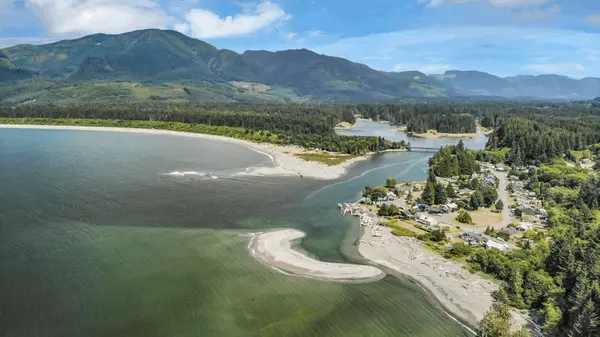
What Makes Life Here Different

Where to Live, Region by Region
Pick a region first. The differences that matter most sit at this level, and the communities inside each one are compared on the region pages.
South Vancouver Island
Greater Victoria and the Cowichan Valley. Greater Victoria offers the Island's strongest combination of public transit, walkable neighbourhoods, hospitals, specialists, government employment and post secondary education. Outside the urban centres, however, daily life becomes considerably more car dependent.
Services and walkability: Victoria, Oak Bay, Sidney, Langford and Duncan.
Coast and small scale: Chemainus, Ladysmith, Crofton, Cowichan Bay and Saltair. Small walkable centres on the water, with imaging and urgent care at Chemainus and ferry links out to the islands.
Water and quiet: Youbou, Lake Cowichan and Honeymoon Bay. Three places on one lake that are nothing alike to live in.
Central Vancouver Island
Nanaimo, Parksville, Qualicum Beach, Courtenay and Comox, with Port Alberni and the Alberni Valley inland as the road route through to the west coast. Nanaimo carries both mainland ferry terminals and an airport, so this is the easiest region for regular mainland travel. Housing costs vary considerably between these communities rather than following one pattern across the region.
For people trying to balance access to services, mainland connections and housing choice, Central Vancouver Island is often one of the regions worth comparing closely.
North Vancouver Island
Campbell River, Sayward, Woss, Port McNeill, Port Hardy, Port Alice, Alert Bay and the smaller communities between them. As you travel north of Campbell River, communities become smaller and services farther apart. Housing can be less expensive than in many southern Island markets, but access to specialized health care, major retail and some everyday services requires more travel.
Worth comparing if space, price, smaller communities and a slower pace matter more to you than having major services close by.
The Pacific Rim
Tofino, Ucluelet and the west coast. Rainfall here is substantially higher than on the east side, and tourism has an unusually large influence on housing, employment and the shape of the year.
This region makes the most sense to compare when access to the west coast lifestyle is important enough to justify its particular housing, island weather and transportation tradeoffs.
The Gulf Islands
Salt Spring, Pender, Galiano, Mayne and the others. Living on the Gulf Islands adds ferry schedules to many off island errands, appointments and visits. Services and housing choices vary considerably from island to island.
Anyone considering them is better served by experiencing that transportation pattern in person, across a working week, than by judging it from a holiday.
The Surrounding Islands
Smaller islands associated with Vancouver Island that are not part of the Gulf Islands group. Some have vehicle ferries and some are reachable on foot or by water taxi only.
Ferry access, everyday services, medical access and housing availability all become more specific to the individual island and to the individual address, so each one has to be checked on its own terms.
Benefits and Drawbacks of Living Here
In Favour
- The Island's mild winters compared with most of Canada
- Parts of the east side are considerably drier than Vancouver Island's reputation suggests
- Access to ocean, lakes, forests and trails, so nature is part of an ordinary week rather than a trip
- Major hospitals and post secondary institutions in the larger centres
- Multiple mainland ferry connections and two airports
- Considerable variation in housing cost between regions, so the same budget buys very differently depending on where you look
- Approximately 300 communities, and this guide works through them one at a time
Against
- No bridge to the mainland, so ferry and air travel shape off Island trips
- Finding a family doctor is the concern raised most often, and in some communities there is no practice taking patients
- Many specialized medical services are concentrated in the Island's larger centres, particularly Victoria and Nanaimo
- Highway 19 and the Malahat carry most of the Island's through traffic with limited alternatives, so closures leave few options
- Winter windstorms can cause power outages in rural communities, and restoration times can be longer in more remote areas
- Cellular coverage can vary significantly by road, neighbourhood and even individual property, so rural coverage should be checked at the specific address
- Most smaller communities assume you have access to a vehicle
Explore Vancouver Island Real Estate
If you are considering a move, explore the local market, see homes currently for sale, or search every listing across Vancouver Island on a map.
8 Questions to Choose a Community

What Changes When You Move Here



What Everyday Life Costs
One Island wide housing number is close to useless, because the range inside it is enormous. Oak Bay and Port Alice sit in the same figure. Anyone quoting an Island average is averaging two markets that have nothing to do with each other.
The pattern that does hold is regional. Greater Victoria sits near mainland pricing. The Cowichan Valley, Nanaimo and the central east coast sit well below it. The north end and Port Alberni are lower again. The Gulf Islands and the west coast behave differently from all of them, because supply is tight and much of it is seasonal.
Three other costs contribute to the higher cost of living here. Groceries and building materials both carry the cost of crossing the water. Fuel is generally above the mainland average and you will use more of it, because the distances are longer. Ferry travel adds up quickly, which is worth pricing before you assume monthly mainland trips.
Property tax is set locally, so two similar homes in different jurisdictions can carry noticeably different bills.
Where Your Budget Goes Further
Generally, the further from Victoria and the further from the water, the less you pay. That puts the more affordable options inland in the Cowichan Valley, in the Alberni Valley, and in the smaller communities north of Campbell River. Inland acreage is usually cheaper than anything with frontage, and a community without a grocery store is usually cheaper than one with a main street.
The saving is real and so is the reason for it. A lower price is usually paid back in fuel, in distance to care, and in fewer options if you later need something smaller nearby.
Climate Changes More Than You Might Expect
The west coast is a different climate rather than a slightly wetter version of the same one. Tofino and Ucluelet receive several times the rainfall of the east coast corridor2, and the nature there feels different because of it. Higher ground and the mountain passes get snow the lowlands do not.
The Island's mild winters are more about wind than snow. Storms take down power on rural lines, and outside the towns generators and backup heat are ordinary rather than unusual.
The practical point is that Island weather can look similar almost everywhere in summer. February does not. If you can only visit once before deciding, visit in February.
Health Care and Getting Around
Island Health runs care across the Island, and it is the part of life here that depends most on your address. Hospitals and specialists are concentrated in Victoria and Nanaimo, with regional hospitals serving the Cowichan Valley, the Comox Valley, Campbell River and Port Alberni6.
The Cowichan Valley shows how much that can move. The only 24 hour emergency department in the valley is currently in Duncan. In 2027 that department relocates to a new 204 bed facility in North Cowichan, with emergency capacity rising from 17 spaces to 454. For some communities in the valley that drive gets shorter, and for others it gets longer.
That is one region and it does not describe the rest of the Island. It is here because it is the clearest example of why the question is always where rather than whether.
What Changes If You Stop Driving?
Car dependence varies more between communities here than almost anything else, and it is the variable people ignore while they can still drive. Greater Victoria has genuine transit and streets built for walking. Nanaimo and the regional centres run systems built around a hub, which work if you live near the hub8. A large number of communities have limited service and plenty have none.
The test is simple. Are groceries, a pharmacy and a bank reachable on foot, or by a bus you would rely on in January? For much of the Island the answer is no, and each community page answers it individually, because a regional answer helps nobody choosing an address.
What It Actually Costs to Live Here



If Your Housing Needs Change, Can You Stay in the Same Community?
Housing Choices in Smaller Communities
A house can suit you for years while the community around it becomes harder to manage. Stairs may matter more later. A long driveway may become less appealing. Driving at night may become something you avoid. A hospital that once seemed close enough may start to feel much farther away.
The next question is whether there is somewhere else to live without leaving the community. Some smaller communities have condos, townhomes, smaller detached homes or purpose built seniors housing. Others are dominated by detached houses, waterfront properties and acreage.
That difference matters because downsizing is not always a move across town. In some communities it means leaving the neighbours, routines and connections built there. Knowing the local housing options before you buy gives you a better idea of whether the community can accommodate more than one stage of your life.
This is not an argument against rural property, acreage or waterfront. It is simply another part of choosing the community as carefully as the house.
The Vancouver Island Real Estate Board's 2019 buyer profile, based on 864 responses, found that approximately 27.4 percent of respondents were already living on Vancouver Island5, approximately 38 percent came from elsewhere in British Columbia, and approximately 23 percent came from outside the province.
Those figures are historical, not a measure of today's buyers. Their useful point is that moving on Vancouver Island does not always mean arriving from somewhere else. A substantial share of the moves captured in that survey were between communities on the Island itself, including moves between larger centres and smaller communities.
Frequently Asked Questions About Living on Vancouver Island
Is living on Vancouver Island worth it?
There is no single answer. The benefits of living on Vancouver Island can include a milder climate, access to the coast and smaller communities, while ferry dependence, longer drives, limited transit and uneven access to services can make other locations harder to live in. The answer depends much more on the community you choose than on Vancouver Island as a whole.
Where is a good place to live on Vancouver Island?
Start with the region rather than the individual house. Someone who needs frequent hospital access, transit and walkable services is solving a different problem from someone looking for acreage, waterfront or a smaller community. Narrow the Island by the things you need close to home, then compare communities within that region.
What is the most affordable place to live on Vancouver Island?
There is no single cheapest community that stays cheapest in every market. More affordable housing is often found outside Greater Victoria and the highest demand waterfront and resort markets, including parts of the Alberni Valley, inland Cowichan Valley and communities farther north. Lower purchase prices can come with longer drives, fewer services and fewer housing options, so price needs to be compared with what the location requires.
Where is the best place to retire on Vancouver Island?
There is no perfect community for everyone. The best place to retire depends on which services, housing choices and transportation options matter most to you, and health care, groceries, walkability and something smaller to move into later can matter more over time than the view or lot size.
Is there a bridge to Vancouver Island?
No. Vehicle travel between Vancouver Island and the mainland requires a ferry7. Passenger flights are available from several Island airports.
How many people live on Vancouver Island?
More than 850,000 people were counted on Vancouver Island in the 2021 Census1.
Useful Resources
- BC FerriesRoutes, terminals, schedules and travel planning between Vancouver Island, the mainland and other islands.
- Island HealthHospitals, health services and facility information across Vancouver Island.
- BC TransitLocal and regional transit information for Vancouver Island communities.
- Tourism Vancouver IslandRegional destination and travel information across Vancouver Island.
Thinking of Moving Here?
Whether you are moving to Vancouver Island or from one Island community to another, I can help you understand what your current home is worth, what the market looks like where you are going and how the two sides of the move fit together.

Let's Connect and Talk