

What Lakefront Costs in Nanaimo Compared With Oceanfront

Lakefront homes in nanaimo.
Lakefront and oceanfront are different products because shoreline access, exposure, maintenance and daily use of the water differ.
That is the part I would build the decision around.
A relocation works better when the community still makes sense on an ordinary winter weekday, not only when the weather is good and the view is doing all the work.
KEY TAKEAWAYS
- Lakefront and oceanfront are different products because shoreline access, exposure, maintenance and daily use of the water differ.
- VIREB reporting provides regional price context, but unusual, waterfront and resort properties require property specific comparisons.
1
- A premium can buy convenience, coast, land, privacy or recreation access, and those benefits are not interchangeable.
- Higher price does not automatically mean lower maintenance.
- For retirement, the premium feature should remain useful if mobility or driving changes.
START WITH THE ORDINARY WEEK
I would judge Nanaimo waterfront by the week you are likely to repeat, not by the day you first visit.
Start with groceries, a pharmacy, medical care, recreation, coffee, friends and the places you go simply to get out of the house. Put those destinations on the map before you become attached to a particular property.
A home can have the right floor plan and still make every small task depend on the car. Another home can be smaller or less dramatic and make the entire week easier.
For retirement, that difference can become more valuable over time. Convenience is not only about saving minutes. It is one of the things that protects independence.
THE HOUSE AND THE LOCATION HAVE TO WORK TOGETHER
I would not choose a home in Nanaimo waterfront from the house outward. I would choose it from the daily life inward.
A single level layout, manageable yard and good storage are useful, but they solve only the part of aging in place that happens inside the property.
Outside the front door, grade, sidewalks, road crossings, transit, distance to services and winter conditions begin to matter.
The best retirement house is not automatically the easiest house to live in. The location has to keep doing some of the work.
HEALTH CARE IS A REGIONAL QUESTION
Health care should be mapped as a network rather than a pin inside Nanaimo waterfront.
The approved public sources for this article describe the local and regional health care system. 2
I would identify where urgent care, hospital care, imaging, specialists and regular primary care would come from. Those may not all be in the same building or even the same community.
That does not make a smaller community a poor retirement choice. It simply means the travel pattern should be understood before health needs make it urgent.
I would also avoid assuming that a move guarantees immediate attachment to a family doctor. Hospital infrastructure and primary care attachment are separate questions.
WHAT HAPPENS IF DRIVING BECOMES DIFFICULT
This is the test I would apply to almost every address in Nanaimo waterfront.
Imagine a temporary period when you cannot drive. It could follow a procedure, an injury or simply a change in confidence. How do groceries arrive? How do you reach an appointment? Can you still see people without arranging a ride every time?
The answer does not have to be a bus. It can be walking, family, community transportation, taxis or a combination. But there should be an answer.
A retirement move is stronger when transportation choices are built into the location before they are needed.
WINTER IS THE BETTER TEST
I would spend time in Nanaimo waterfront outside the main summer season.
Winter strips away the visitor version of Vancouver Island. The days are shorter, outdoor routines change and the places you use repeatedly become much more obvious.
Try the grocery run. Walk the route you think you will walk. Visit the community centre, library or recreation facility. Drive to health care in ordinary weather.
If the community still feels complete when the patios are quiet, you are evaluating the place you will actually live rather than the place you vacation in.
FAMILY ACCESS IS PART OF AGING IN PLACE
Retirement planning often focuses on the house and forgets the people who may need to reach it.
If adult children, grandchildren or close friends live elsewhere, the travel between you matters. On Vancouver Island that can include a ferry, an airport or a long Island drive.
Transportation sources in this article provide the regional context where it applies. 3
I would count the full door to door trip. A location that is easy for family to reach can support more frequent visits and make practical help easier later.
There is no correct distance from family. There is only the distance you are genuinely comfortable living with.
DOWNSIZING SHOULD REMOVE WORK
I think downsizing is successful when it removes obligations rather than only removing square footage.
A smaller home with a complicated yard, steep driveway or long list of exterior jobs may not reduce much work. A slightly larger home with simple systems and good access may be easier.
I would list the jobs the property creates. Cleaning, landscaping, snow or storm cleanup, exterior maintenance, private water, septic, docks, retaining walls and outbuildings all count when they apply.
Then decide which jobs you still want. Retirement is a good time to stop paying for space with your time.
PAY FOR THE FEATURE YOU WILL USE
A premium property should improve the life you actually live.
If the higher price buys a walkable centre, usable shoreline, privacy, low maintenance or direct recreation access, the reason for the premium is clear.
If it mainly buys more house than you need, I would be cautious.
Retirement changes the meaning of luxury. Time, convenience and the ability to stay independent can become more valuable than another room.
I would pay attention to what the premium removes as well as what it adds.
PRICE NEEDS A LIFESTYLE EXPLANATION
The housing cost in Nanaimo waterfront matters only when it explains how the place lives.
Where market context is relevant, VIREB reporting provides a defensible regional reference. 1
I would not turn that into a promise about a specific property. Benchmarks do not capture every waterfront home, acreage, resort unit, rural property or unusual dwelling.
The useful question is what the extra money or saving changes. Does it buy walkability, privacy, land, a shorter trip to health care or a simpler property?
If the price difference does not improve something you value, it is not automatically better value.
THE SECOND MOVE DESERVES ATTENTION
I would also ask whether Nanaimo waterfront gives you another housing option if the first retirement home eventually becomes too much.
You may want a detached home now and a condominium, townhome or more supported setting later. If that second choice exists nearby, you may be able to keep the same friends, services and familiar routes.
That can make a later move much less disruptive. Changing the house is easier when you do not have to rebuild the entire community around you.
This is not planning for decline. It is planning for choice. A community that offers more than one workable housing stage can help you stay connected longer.
CONNECTION MATTERS AS MUCH AS AMENITIES
A list of amenities does not tell me whether somebody will feel connected.
Connection comes from repetition. You walk the same route, attend the same program, volunteer, use the same coffee shop or see familiar people at the same recreation facility.
Official community sources describe the public spaces and services that support those routines. 4
I would look for a community where your normal week naturally puts you near other people. Retirement can remove the automatic social contact that work once supplied.
The goal is not to stay busy every hour. It is to make staying connected easy enough that it does not require a major plan.
THE TRADE SHOULD BE DELIBERATE
Every version of Nanaimo waterfront has a trade.
More space can mean more maintenance. More privacy can mean more driving. A compact centre can mean less land. Waterfront can mean exposure and upkeep. A lower purchase price can mean a longer trip to services.
I do not see those as warnings. They are simply the price of getting something else you value.
The strongest relocation decision is the one where you can name the compromise before you move and still choose it. That is very different from discovering the compromise after the house has already decided your routine.
HOW I WOULD MAKE THE FINAL COMPARISON
I would shortlist actual addresses in Nanaimo waterfront and compare them without the listing language.
Start at the front door and follow the routes you will use every week. Then look at the property itself and ask what must be heated, insured, repaired, landscaped and eventually replaced.
Next, imagine driving less. Then imagine needing more health care. Then imagine family visiting more often. A good location should not collapse under any one of those changes.
Finally, ask whether the community gives you reasons to leave the house in winter. Recreation, volunteering, walking, coffee, libraries and familiar public spaces all matter.
That is the comparison I trust. It turns a relocation from a housing decision into a life decision, which is what it was all along.
FAQ
Is Nanaimo waterfront a good place for retirement?
It can be if the trade described in this article matches the way you want to live. Lakefront and oceanfront are different products because shoreline access, exposure, maintenance and daily use of the water differ.
I would make the final decision from the exact neighbourhood, health care route and transportation plan rather than the community name alone.
Can I live in Nanaimo waterfront if I drive less later?
That depends heavily on the address. I would check walking routes, transit where available, groceries, medical care and the people who could help before assuming a car will always solve the distance.
A location that preserves more than one transportation option is easier to keep over time.
What should I check first before moving to Nanaimo waterfront?
Start with the ordinary week: groceries, health care, recreation, family travel and property maintenance.
Then compare actual homes that support that routine. I would rather compromise on a feature inside the house than accidentally build a retirement around repeated inconvenient trips.
SOURCES
1 Vancouver Island Real Estate Board, 2026. Market statistics and MLS information.
2 City of Nanaimo, 2026. Parks and lake information.
3 Island Health, 2026. Nanaimo Regional General Hospital information.
4 BC Transit, 2026. Nanaimo transit information.
Categories
- All Blogs (208)
- BC Property Tax Search (10)
- Cost of Living in the Cowichan Valley (3)
- Cost of Living in the Pacific Rim (3)
- Cost of Living on Central Vancouver Island (3)
- Cost of Living on Cowichan Lake (3)
- Cost of Living on North Vancouver Island (3)
- Cost of Living on South Vancouver Island (3)
- Cost of Living on the Gulf Islands (3)
- Cost of Living on the Surrounding Islands (3)
- Cost of Living on Vancouver Island (5)
- Living in the Cowichan Valley (3)
- Living in the Pacific Rim (3)
- Living in Youbou (3)
- Living on Central Vancouver Island (3)
- Living on Cowichan Lake (3)
- Living on North Vancouver Island (3)
- Living on South Vancouver Island (3)
- Living on the Gulf Islands (3)
- Living on the Surrounding Islands (3)
- Living on Vancouver Island (26)
- Log Homes (3)
- Most Affordable Central Vancouver Island (3)
- Most Affordable Comox Valley (1)
- Most Affordable Cowichan Valley (1)
- Most Affordable Gulf Islands (3)
- Most Affordable in Campbell River (1)
- Most Affordable Nanaimo (1)
- Most Affordable North Island (1)
- Most Affordable North Vancouver Island (3)
- Most Affordable Pacific Rim (3)
- Most Affordable Parksville Qualicum (1)
- Most Affordable South Vancouver Island (3)
- Most Affordable Surrounding Islands (4)
- Most Affordable Vancouver Island (4)
- Most Expensive Campbell River (1)
- Most Expensive Central Vancouver Island (3)
- Most Expensive Comox Valley (1)
- Most Expensive Cowichan Valley (1)
- Most Expensive Gulf Islands (3)
- Most Expensive Nanaimo (1)
- Most Expensive North Island (1)
- Most Expensive North Vancouver Island (3)
- Most Expensive Pacific Rim (3)
- Most Expensive Parksville Qualicum (1)
- Most Expensive Port Alberni Area (2)
- Most Expensive South Vancouver Island (3)
- Most Expensive Surrounding Islands (4)
- Most Expensive Vancouver Island (4)
- Moving to Central Vancouver Island (3)
- Moving to Cowichan Lake Area (3)
- Moving to Cowichan Valley (3)
- Moving to North Vancouver Island (3)
- Moving to South Vancouver Island (3)
- Moving to the Gulf Islands (3)
- Moving to the Pacific Rim (3)
- Moving to the Surrounding Islands (3)
- Moving to Vancouver Island (3)
- People’s Choice Awards (11)
- Real Estate Market Guide (6)
- Vancouver Island Real Estate Market Reports (6)
- Youbou Real Estate Market Reports (3)
Recent Posts





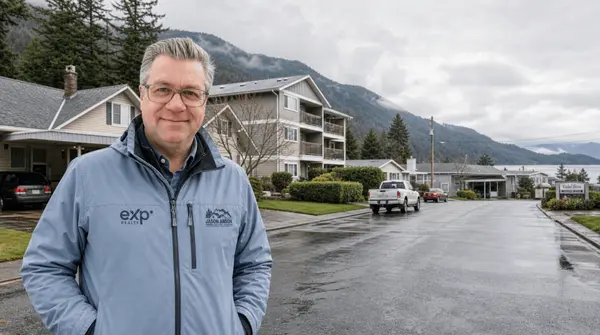




Accurate Home Values. Proven Results.
Whether you are buying, selling or simply working out what your property is worth, the number matters more than the opinion. Market conditions on Vancouver Island shift by community and by month, and a value that was right in the spring may not hold by the fall.
I do not guess your home's value. I prove it, using actual market value and real market movement so you can protect your equity and move forward with confidence. Send me the address and I will show you the numbers.