

What It Costs to Keep a Home Where the Building Trade Travels In

Keeping a home on the North Island changes the meaning of convenience.
On the North Island, I would never judge a place only by the house, the view or the purchase price. I would judge it by the ordinary week that follows after the moving truck leaves.
The useful question is simple. Where do groceries, health care, repairs, family visits and the things you cannot buy locally fit into your life?
That is where the North Island starts to make sense, or stops making sense, as a permanent home.
KEY TAKEAWAYS
- the North Island works best when you are comfortable planning errands instead of expecting every service within a short drive. • Health care exists on the North Island, but some specialist care can still mean travel south through the Island Health system.2 • Highway 19 is not just a route on a map. For many households it becomes part of appointment, shopping and family planning.4 • A smaller service base makes the exact location of your home more important if driving becomes difficult. • The trade for distance is a daily life with fewer urban choices, not a life without services.
Travel time can become part of the invoice
Keeping a home in a remote community changes the service call.
A contractor based nearby may charge normally.
A specialist travelling from another community may need to recover travel time, fuel or both.
Exact travel charges vary by trade and contractor, so current written quotes are required [UNSOURCED].
This is why I would ask where the contractor is based before approving work.
The cheapest hourly rate can become less important than the travel policy.
For a larger job, travel may be a small share of the total.
For a short service call, it can matter much more.
The practical response is to maintain the house before problems become emergencies.
Planned work gives you time to compare contractors, coordinate visits and order parts.
Urgent work removes those choices.
Simple systems are valuable
A remote house rewards simplicity.
Common heating equipment, standard plumbing fixtures and readily available electrical components are easier to service than unusual systems that depend on one specialist.
That does not mean every home should be basic.
It means complexity has a maintenance cost.
Before buying, I would ask who services the heating system, where replacement parts come from and whether the equipment is still supported.
The same applies to pumps, generators, septic equipment and specialty controls.
Exact service availability needs local contractor confirmation [UNSOURCED].
A system can work perfectly on inspection day and still be a poor fit if nobody nearby wants to maintain it.
The best remote home is often the one whose essential systems can be understood and repaired without a major expedition.
Deferred maintenance is more expensive when help is far away
A small roof leak, failing pump or drainage problem rarely becomes cheaper by waiting.
In a remote location, delay can add another layer because the eventual repair may need more materials, more labour and more urgent scheduling.
I would inspect the boring parts of the house carefully.
Roof.
Gutters.
Drainage.
Electrical panel.
Plumbing.
Heating.
Foundation.
Access.
Those items do not sell a lifestyle, but they determine how much work the lifestyle requires.
For exact repair costs, written local quotes are necessary [UNSOURCED].
I would rather pay more for a well maintained simple home than assume that every project on a cheaper property can be completed at city pricing.
The North Island does not make maintenance impossible. It makes planning more valuable.
Materials have a transportation cost
Building materials do not appear at the property by themselves.
For common items, local suppliers may solve the problem.
For larger orders or specialty products, freight and delivery can become part of the project budget.
Exact charges depend on supplier, volume and destination [UNSOURCED].
That can change renovation decisions.
A product that looks inexpensive online may be less attractive after shipping.
A locally available alternative may become the better value even at a higher shelf price.
I would confirm delivery before ordering anything large.
Also confirm where the truck can unload.
Remote properties can have narrow access, steep grades or limited turning room.
A delivery problem is much easier to solve on paper than when a truck is already at the driveway.
Weather exposes maintenance quickly
North Island homes live in a coastal climate where water management matters.
I would pay close attention to roof condition, flashing, exterior finishes, drainage and ventilation.
The goal is not to fear weather.
It is to keep water outside the building and moisture controlled inside it.
A small maintenance issue can become a larger repair if it is ignored through a wet season.
Contractor availability can then become part of the problem.
I would schedule exterior work early rather than waiting for the first major storm to reveal it.
For property specific risk, a qualified inspection is required [UNSOURCED].
The general principle is simple.
A remote location gives you fewer reasons to postpone routine maintenance because emergency service is exactly when travel, timing and limited contractor choice hurt most.
A maintenance reserve should reflect the house
I do not like generic rules that say every homeowner should save the same percentage for repairs.
The right reserve depends on the building.
An older roof, aging heating system and original windows create a different risk from a recently upgraded home.
Remote travel can increase the cost of some work, but the condition of the house remains the bigger variable.
I would build a list of major components, expected replacement timing and local service options.
Then fund the reserve around that list.
Exact future costs need current quotes [UNSOURCED].
This is especially useful when downsizing.
A smaller house is not automatically easier if it has several aging systems.
A slightly larger home with simpler, newer components may create less maintenance work and fewer emergency calls.
Aging in place includes maintaining the property
Aging in place often focuses on stairs and bathrooms.
Home maintenance deserves equal attention.
Who cleans gutters?
Who handles snow or storm debris where applicable?
Who moves firewood?
Who checks the crawlspace?
Who responds when the pump fails?
Tasks that feel ordinary now can become the reason a rural property stops working later.
I would choose a home whose maintenance can increasingly be hired out.
That requires contractors who will actually service the location.
Ask before buying.
Current availability and travel policies need direct local confirmation [UNSOURCED].
A home can be physically accessible and still be difficult to age in if the property demands constant outdoor labour.
The easiest future house is usually the one with fewer systems, less land to manage and good access for the people who will eventually help.
The cheapest house can be the expensive one
Purchase price is visible.
Maintenance risk is quieter.
That is why remote affordability can be misleading.
A low priced home with an aging roof, unusual heating system and difficult access can consume the savings quickly.
A better maintained home may cost more at the beginning and less to live with.
I would compare properties by total burden.
Purchase.
Immediate repairs.
Expected major replacements.
Travel for trades.
Material delivery.
Your own time.
Not every item needs an exact dollar figure on day one, but the large risks should be identified.
For exact project costs, obtain written quotes [UNSOURCED].
The goal is not to eliminate maintenance. Every house needs it.
The goal is to choose a North Island home whose maintenance demands still make sense when distance is added to the equation.
The decision has to survive an ordinary week
I always come back to the same test with the North Island.
Take away the holiday weather and the excitement of a move.
Imagine a normal week with groceries to buy, a prescription to fill, a vehicle that needs attention, a home repair to arrange and a family commitment somewhere else on Vancouver Island.
Then imagine the same week when you do not feel like driving.
That exercise is more useful than asking whether the community is attractive.
Remote living works when the routine is acceptable, not merely when the setting is appealing.
I would also think about the next move.
If the property becomes too much to maintain, is there a smaller housing option nearby, or would downsizing mean leaving the community?
That question matters in retirement because a move that works now may need a second stage later.
There is no universal answer.
The value of doing the exercise is that it exposes the trade before the trade becomes a problem.
A North Island home should make daily life simpler in the ways that matter to you, even if it makes some trips longer.
FAQ
Do contractors charge extra to travel to remote North Island homes?
Some may charge travel time, mileage or a call out amount, but there is no responsible universal figure. Get current written quotes from contractors who actually service the property location [UNSOURCED].
What should I inspect most carefully before buying?
Focus on the systems that become expensive when they fail, including roof, drainage, heating, electrical, plumbing and access. A property specific inspection is needed to assess condition [UNSOURCED].
What makes a home easier to maintain in my senior years?
Simple systems, good access, less exterior work and reliable local service options all help. I would also choose a property where maintenance tasks can be hired out rather than depending on your own physical labour.
SOURCES
1 Statistics Canada, 2021 Census of Population, published 2022 and updated in later profile releases. 2 Island Health, 2026, North Vancouver Island hospital, primary care and community health service information. 3 BC Transit, 2026, Mount Waddington regional transit schedules and service information. 4 Province of British Columbia, DriveBC, 2026, Highway 19 road information and travel conditions.
Categories
- All Blogs (208)
- BC Property Tax Search (10)
- Cost of Living in the Cowichan Valley (3)
- Cost of Living in the Pacific Rim (3)
- Cost of Living on Central Vancouver Island (3)
- Cost of Living on Cowichan Lake (3)
- Cost of Living on North Vancouver Island (3)
- Cost of Living on South Vancouver Island (3)
- Cost of Living on the Gulf Islands (3)
- Cost of Living on the Surrounding Islands (3)
- Cost of Living on Vancouver Island (5)
- Living in the Cowichan Valley (3)
- Living in the Pacific Rim (3)
- Living in Youbou (3)
- Living on Central Vancouver Island (3)
- Living on Cowichan Lake (3)
- Living on North Vancouver Island (3)
- Living on South Vancouver Island (3)
- Living on the Gulf Islands (3)
- Living on the Surrounding Islands (3)
- Living on Vancouver Island (26)
- Log Homes (3)
- Most Affordable Central Vancouver Island (3)
- Most Affordable Comox Valley (1)
- Most Affordable Cowichan Valley (1)
- Most Affordable Gulf Islands (3)
- Most Affordable in Campbell River (1)
- Most Affordable Nanaimo (1)
- Most Affordable North Island (1)
- Most Affordable North Vancouver Island (3)
- Most Affordable Pacific Rim (3)
- Most Affordable Parksville Qualicum (1)
- Most Affordable South Vancouver Island (3)
- Most Affordable Surrounding Islands (4)
- Most Affordable Vancouver Island (4)
- Most Expensive Campbell River (1)
- Most Expensive Central Vancouver Island (3)
- Most Expensive Comox Valley (1)
- Most Expensive Cowichan Valley (1)
- Most Expensive Gulf Islands (3)
- Most Expensive Nanaimo (1)
- Most Expensive North Island (1)
- Most Expensive North Vancouver Island (3)
- Most Expensive Pacific Rim (3)
- Most Expensive Parksville Qualicum (1)
- Most Expensive Port Alberni Area (2)
- Most Expensive South Vancouver Island (3)
- Most Expensive Surrounding Islands (4)
- Most Expensive Vancouver Island (4)
- Moving to Central Vancouver Island (3)
- Moving to Cowichan Lake Area (3)
- Moving to Cowichan Valley (3)
- Moving to North Vancouver Island (3)
- Moving to South Vancouver Island (3)
- Moving to the Gulf Islands (3)
- Moving to the Pacific Rim (3)
- Moving to the Surrounding Islands (3)
- Moving to Vancouver Island (3)
- People’s Choice Awards (11)
- Real Estate Market Guide (6)
- Vancouver Island Real Estate Market Reports (6)
- Youbou Real Estate Market Reports (3)
Recent Posts





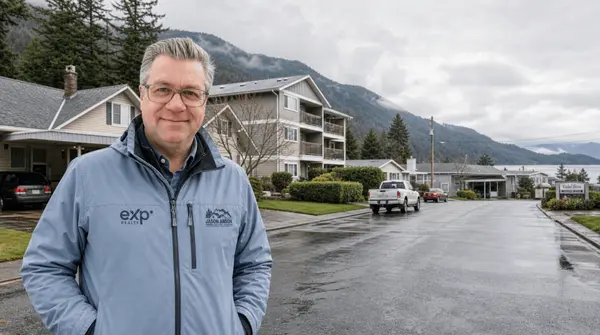




Accurate Home Values. Proven Results.
Whether you are buying, selling or simply working out what your property is worth, the number matters more than the opinion. Market conditions on Vancouver Island shift by community and by month, and a value that was right in the spring may not hold by the fall.
I do not guess your home's value. I prove it, using actual market value and real market movement so you can protect your equity and move forward with confidence. Send me the address and I will show you the numbers.