

Moving From the Lower Mainland to Lasqueti Island, Where the Last Ferry Leaves the Car Behind
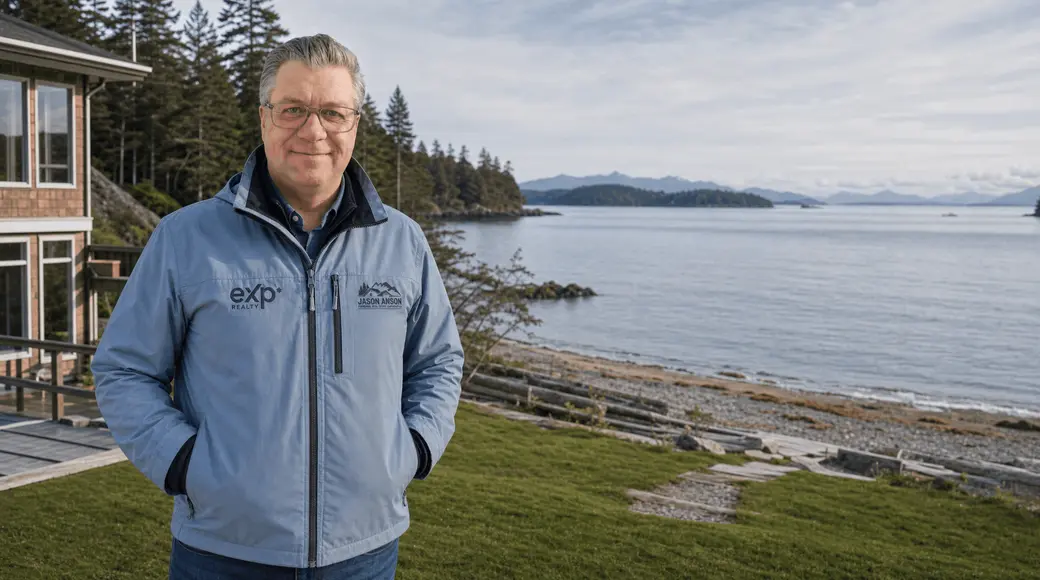
Moving from the Lower Mainland to Lasqueti Island is not simply a move from city to island. It is a move from public infrastructure toward personal systems.
The last ferry does not bring your car with you.
The qathet Regional District describes Lasqueti as off grid and accessible by foot passenger ferry from French Creek on Vancouver Island. 1
That means the relocation changes power, water, transportation, emergency planning and the way every large object reaches your home.
Key takeaways
- Lasqueti is off grid and reached by a foot passenger ferry from French Creek rather than a public vehicle ferry. 1
- A Lower Mainland household moving there gives up many invisible urban systems and takes direct responsibility for replacements.
- Internet access has depended on island specific wireless infrastructure and alternate power. 2
- Medical and emergency planning require more preparation because the nearest major services are off island. 1
- The move works best for people who want to operate systems themselves, not simply live farther from traffic.
The move starts before the moving truck
A normal Lower Mainland move assumes a truck can reach the driveway. Lasqueti breaks that assumption because the public ferry is passenger only. 1
Furniture, tools, appliances and building materials therefore need a marine logistics plan separate from your own passenger trip.
I would solve that before choosing a move date. The house may be ready long before the transportation plan is.
You are leaving the electrical grid
Lasqueti is described by the regional district as off grid. 1 That means the household becomes responsible for generation, storage and backup power.
A Lower Mainland utility bill is simple because the infrastructure is external. On Lasqueti, the batteries, panels, generator and fuel strategy are part of the property itself.
I would want a complete explanation of the system and a realistic replacement budget before buying.
The easiest way to judge the move is to write down the places you use in a normal month now. Include doctors, groceries, family, work, recreation, pharmacy and trades. Then put a ferry in front of every trip that still points back to the old community. That quickly shows whether the move changes your life a little or a lot.
Water becomes a property question
Urban water disappears into a monthly bill. On a remote island property, the water source and storage system are physical things you need to understand.
A well, rain collection system, cistern or combination can work very well. The risk comes from not knowing capacity, seasonal behaviour or maintenance requirements.
For retirement, simple and reliable water infrastructure is more important to me than an impressive extra room.
The car has to live on one side or the other
Because the public ferry does not carry household vehicles, transportation has to be split. 1 You may need access to a vehicle on Vancouver Island and a separate arrangement on Lasqueti.
That creates parking, insurance, maintenance and ride planning questions that do not exist in a normal suburban move.
If you later stop driving, both sides of that system need a replacement.
Moving costs themselves also change when access is marine. A mover may need different timing, a vehicle booking or a transfer arrangement. I would plan the move around the transportation system rather than assuming the transportation system will adapt to the move.
Internet should be verified at the exact house
Regional studies describe Lasqueti internet as a local wireless network built around island conditions and alternate power. 2
That is a real achievement, but it also means service can be more location specific than in a dense urban neighbourhood.
If you depend on video calls, remote work or online medical appointments, verify the exact connection before making the move.
Emergency access changes the risk calculation
The regional emergency guide makes clear that Lasqueti has a different emergency service environment from larger Vancouver Island communities. 1
That does not make ordinary life unsafe by definition. It means the household has to know local contacts, evacuation options and the limits of response.
Health needs that are easy to manage near a city hospital can feel very different when care begins with a marine crossing.
The social adjustment can be subtle. Friends who were a short drive away may now need to check a ferry. You may see them just as often, but visits become more deliberate. That can feel peaceful or isolating depending on how much spontaneous contact matters to you.
Family visits become events
Family in the Lower Mainland will not be able to drive directly to your door. They have to reach Vancouver Island, get to French Creek and then take the passenger ferry.
That can reduce casual visits and make overnight planning more important.
If family connection is central to your retirement, I would be realistic about how often everyone is willing to make that journey.
The move succeeds when you want the responsibility
Lasqueti is not simply quieter than the Lower Mainland. It asks you to manage more of the infrastructure that urban life normally hides.
That can feel satisfying if independence is part of the goal. It can feel relentless if you were only trying to get away from congestion.
The right reason to move is not escape. It is a genuine preference for a life where systems, access and self reliance are part of the daily routine.
Aging in place should be considered at the start of the move, not after mobility changes. Look at stairs, driveway grade, distance to the terminal, access to groceries and the availability of rides. A move that works for the next few years but not for the years after that may simply create another move.
The decision I would make before buying
The easiest way to judge the move is to write down the places you use in a normal month now. Include doctors, groceries, family, work, recreation, pharmacy and trades. Then put a ferry in front of every trip that still points back to the old community. That quickly shows whether the move changes your life a little or a lot.
Moving costs themselves also change when access is marine. A mover may need different timing, a vehicle booking or a transfer arrangement. I would plan the move around the transportation system rather than assuming the transportation system will adapt to the move.
The social adjustment can be subtle. Friends who were a short drive away may now need to check a ferry. You may see them just as often, but visits become more deliberate. That can feel peaceful or isolating depending on how much spontaneous contact matters to you.
Aging in place should be considered at the start of the move, not after mobility changes. Look at stairs, driveway grade, distance to the terminal, access to groceries and the availability of rides. A move that works for the next few years but not for the years after that may simply create another move.
Planning for the day that does not go to plan
I would also price the inconvenience of a failed plan. Ferries can be missed, equipment can break and weather can change a day. The households that handle island life well usually have a second option for important trips, a small reserve for unexpected costs and enough flexibility that one disruption does not become a crisis. That resilience is not pessimism. It is the practical side of choosing to live across water from the services you depend on. I would ask the same question about the property itself. If the main transportation plan failed for a week, could groceries still arrive, could an appointment still be reached and could a repair person still get to the house? If the answer depends on one vehicle, one boat or one person, I would build a backup before moving. Island living becomes much easier when ordinary disruptions have ordinary solutions rather than emergency improvisation.
The final check I would make is whether the arrangement still works when the household is tired, busy or dealing with a health problem. A lifestyle that only works when every trip is perfectly planned is fragile. Good island living has some slack in it. There is food in the house, a backup ride, enough stored supplies and a way to postpone a nonessential trip without creating a problem. That margin is especially valuable in senior years because it protects independence. The island should simplify the life you want to live, not require constant effort just to keep ordinary routines functioning.
Frequently asked questions
Can a moving truck take the ferry to Lasqueti Island?
Not on the regular public ferry, which is a foot passenger service from French Creek. 1 Large household goods therefore need separate marine transport arrangements.
Does Lasqueti have normal power and internet?
The island is off grid, so homes use private power systems. 1 A regional connectivity study describes local wireless internet infrastructure, but service should be verified at the exact property. 2
What is the biggest adjustment from the Lower Mainland?
Responsibility. Transportation, power, water and emergency planning become much more visible parts of running the household than they are in a city.
Sources
1. qathet Regional District, Lasqueti Island Community Evacuation Guide, 2024. 2. qathet Regional District, Connected Communities, The Last Mile, 2021.
Categories
- All Blogs (208)
- BC Property Tax Search (10)
- Cost of Living in the Cowichan Valley (3)
- Cost of Living in the Pacific Rim (3)
- Cost of Living on Central Vancouver Island (3)
- Cost of Living on Cowichan Lake (3)
- Cost of Living on North Vancouver Island (3)
- Cost of Living on South Vancouver Island (3)
- Cost of Living on the Gulf Islands (3)
- Cost of Living on the Surrounding Islands (3)
- Cost of Living on Vancouver Island (5)
- Living in the Cowichan Valley (3)
- Living in the Pacific Rim (3)
- Living in Youbou (3)
- Living on Central Vancouver Island (3)
- Living on Cowichan Lake (3)
- Living on North Vancouver Island (3)
- Living on South Vancouver Island (3)
- Living on the Gulf Islands (3)
- Living on the Surrounding Islands (3)
- Living on Vancouver Island (26)
- Log Homes (3)
- Most Affordable Central Vancouver Island (3)
- Most Affordable Comox Valley (1)
- Most Affordable Cowichan Valley (1)
- Most Affordable Gulf Islands (3)
- Most Affordable in Campbell River (1)
- Most Affordable Nanaimo (1)
- Most Affordable North Island (1)
- Most Affordable North Vancouver Island (3)
- Most Affordable Pacific Rim (3)
- Most Affordable Parksville Qualicum (1)
- Most Affordable South Vancouver Island (3)
- Most Affordable Surrounding Islands (4)
- Most Affordable Vancouver Island (4)
- Most Expensive Campbell River (1)
- Most Expensive Central Vancouver Island (3)
- Most Expensive Comox Valley (1)
- Most Expensive Cowichan Valley (1)
- Most Expensive Gulf Islands (3)
- Most Expensive Nanaimo (1)
- Most Expensive North Island (1)
- Most Expensive North Vancouver Island (3)
- Most Expensive Pacific Rim (3)
- Most Expensive Parksville Qualicum (1)
- Most Expensive Port Alberni Area (2)
- Most Expensive South Vancouver Island (3)
- Most Expensive Surrounding Islands (4)
- Most Expensive Vancouver Island (4)
- Moving to Central Vancouver Island (3)
- Moving to Cowichan Lake Area (3)
- Moving to Cowichan Valley (3)
- Moving to North Vancouver Island (3)
- Moving to South Vancouver Island (3)
- Moving to the Gulf Islands (3)
- Moving to the Pacific Rim (3)
- Moving to the Surrounding Islands (3)
- Moving to Vancouver Island (3)
- People’s Choice Awards (11)
- Real Estate Market Guide (6)
- Vancouver Island Real Estate Market Reports (6)
- Youbou Real Estate Market Reports (3)
Recent Posts



Accurate Home Values. Proven Results.
Whether you are buying, selling or simply working out what your property is worth, the number matters more than the opinion. Market conditions on Vancouver Island shift by community and by month, and a value that was right in the spring may not hold by the fall.
I do not guess your home's value. I prove it, using actual market value and real market movement so you can protect your equity and move forward with confidence. Send me the address and I will show you the numbers.