

Living on Lasqueti Island, Off Grid and Without a Vehicle Ferry
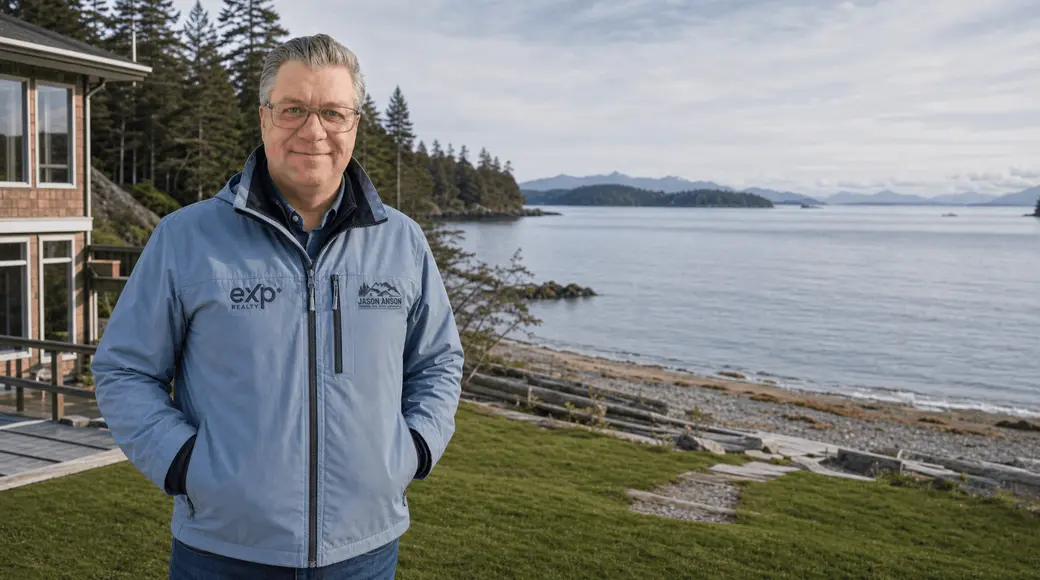
Living on Lasqueti Island means accepting that the public ferry does not take your vehicle to Vancouver Island.
That single fact changes nearly everything about the move.
The qathet Regional District describes Lasqueti as an off grid island reached by a foot passenger ferry from French Creek on Vancouver Island. 1
A car can exist on Lasqueti, but it does not simply roll onto the public ferry with you. Supplies, emergencies, repairs and travel all have to be understood through that separation.
Key takeaways
- Lasqueti is off grid and the public ferry from French Creek is for foot passengers rather than vehicles. 1
- The island does not have conventional emergency access in the same form as a connected Vancouver Island community. 1
- Local internet has been built through island specific infrastructure rather than ordinary urban utility service. 2
- A move to Lasqueti requires a plan for power, water, transportation, communications and supply movement before the house itself makes sense.
- The lifestyle can be deeply independent, but that independence is a daily operating requirement rather than a marketing idea.
The car stops at the water
The public connection between French Creek and Lasqueti is a passenger service rather than a vehicle ferry. 1 That means the ordinary Vancouver Island model of loading the car with groceries and driving home does not apply.
You need a system on each side. That may mean a vehicle or ride arrangement on Vancouver Island, another vehicle or local transport on Lasqueti, and a way to move anything too large to carry as luggage.
This is the first filter I would use when deciding whether Lasqueti is realistic. If that sounds like an interesting system to solve, keep reading. If it sounds exhausting, the island is probably telling you something useful.
Off grid is literal here
The qathet Regional District describes Lasqueti as an off grid community. 1 Homes therefore depend on private systems rather than a normal connection to the provincial electrical grid.
Power may involve solar generation, batteries, generators and careful management of demand. Water can involve wells, rain collection, storage or other property specific systems.
The important point is not the technology. It is responsibility. When a system fails, the solution begins with your own equipment, your own backup plan and your ability to get parts or help to the island.
Weather is another useful filter. The question is not whether the island has pleasant summers. The question is whether the access system still suits you during wet, dark months when an appointment, repair or grocery trip cannot be postponed. Year round confidence comes from testing the least glamorous days.
Supplies become logistics
A renovation on Vancouver Island starts with a trip to a supplier. On Lasqueti, the same project starts with transportation planning.
Anything heavy, awkward or time sensitive has to cross water without the convenience of a public vehicle ferry. That affects appliances, fuel, construction materials, replacement equipment and even some forms of waste removal.
This is where an inexpensive property can become expensive to operate. The purchase price does not tell you the cost of maintaining a house whose systems and supplies must move through a marine link.
Emergency planning is not optional
The qathet Regional District emergency guide states that Lasqueti does not have the same conventional emergency service access found in larger communities and identifies Parksville and Nanaimo as important off island service locations. 1
That should be read as a lifestyle fact, not a reason for panic. Remote communities function because residents plan, prepare and know what resources are actually available.
For retirement, I would be especially careful about medications, mobility, chronic medical needs and how quickly off island care may be required.
One thing I would do before moving is spend an ordinary weekday there rather than a holiday afternoon. Buy groceries, make a timed appointment off island, come home in the dark and see how the transportation pattern feels when there is nothing recreational about it. That is the version of island life you will actually repeat.
Internet exists, but it has an island history
A regional connectivity study described a local Lasqueti internet network built to serve much of the island through wireless infrastructure and alternate power. 2
That is very different from assuming a standard urban cable connection will be waiting at the property line. Coverage and performance can depend on location and line of sight.
If you work remotely, use video appointments or rely on internet calling, I would verify service at the exact property rather than treating island wide availability as enough.
Driving less does not mean needing less transportation
Lasqueti is a useful reminder that giving up a daily car commute is not the same as becoming independent of transportation.
You may walk onto the ferry, but you still need to reach French Creek, move groceries, get to appointments and handle heavy items. The transportation problem becomes more complicated, not less.
If driving becomes difficult, the question is who helps on each side of the water and whether those arrangements can continue reliably.
I would also look at the home as a piece of infrastructure. Road access, stairs, water, heat, backup power, storage and the distance to essential services affect daily independence. A property can be beautiful and still be poorly designed for the way you expect to live in your senior years.
Community matters because systems are local
On a remote island, neighbours are not just social contacts. Local knowledge can matter when equipment fails, weather changes, a ride is needed or a delivery has to be coordinated.
That does not mean assuming help will always appear. It means recognizing that social connection has a practical side that is less visible in a city.
For someone moving in from the Lower Mainland or a large Vancouver Island community, building those relationships is part of adapting to the island.
Lasqueti is a commitment, not an escape
I would never describe Lasqueti as a simple way to get away from city life. It is a place where the systems a city normally hides become visible.
Power has to come from somewhere. Water has to be secured. Transportation has to be arranged. Emergency access has limits. Supplies have to cross water.
For the right household, that direct relationship with daily systems is the appeal. For the wrong household, it becomes a list of chores that never quite ends.
Community connection matters for practical reasons as well as social ones. On an island, a neighbour who can offer a ride, collect a parcel or explain a local service can make life easier. I would not assume that help is automatic, but I would treat the ability to build local relationships as part of the move.
The decision I would make before buying
One thing I would do before moving is spend an ordinary weekday there rather than a holiday afternoon. Buy groceries, make a timed appointment off island, come home in the dark and see how the transportation pattern feels when there is nothing recreational about it. That is the version of island life you will actually repeat.
I would also look at the home as a piece of infrastructure. Road access, stairs, water, heat, backup power, storage and the distance to essential services affect daily independence. A property can be beautiful and still be poorly designed for the way you expect to live in your senior years.
Community connection matters for practical reasons as well as social ones. On an island, a neighbour who can offer a ride, collect a parcel or explain a local service can make life easier. I would not assume that help is automatic, but I would treat the ability to build local relationships as part of the move.
Weather is another useful filter. The question is not whether the island has pleasant summers. The question is whether the access system still suits you during wet, dark months when an appointment, repair or grocery trip cannot be postponed. Year round confidence comes from testing the least glamorous days.
Planning for the day that does not go to plan
I would also price the inconvenience of a failed plan. Ferries can be missed, equipment can break and weather can change a day. The households that handle island life well usually have a second option for important trips, a small reserve for unexpected costs and enough flexibility that one disruption does not become a crisis. That resilience is not pessimism. It is the practical side of choosing to live across water from the services you depend on. I would ask the same question about the property itself. If the main transportation plan failed for a week, could groceries still arrive, could an appointment still be reached and could a repair person still get to the house? If the answer depends on one vehicle, one boat or one person, I would build a backup before moving. Island living becomes much easier when ordinary disruptions have ordinary solutions rather than emergency improvisation.
Frequently asked questions
Can I take my car on the ferry to Lasqueti Island?
No. The public ferry connection from French Creek to Lasqueti is a foot passenger service. 1 Vehicle arrangements on Lasqueti therefore have to be separate from the vehicle you use on Vancouver Island.
Does Lasqueti Island have normal hydro service?
Lasqueti is described by the qathet Regional District as off grid. 1 A property needs its own power system and backup plan, so I would inspect the energy setup as carefully as the house itself.
Is Lasqueti practical for retirement?
It can be, but only if the household is comfortable with remote access, private utility systems and more complicated emergency planning. Medical needs, mobility and the ability to manage repairs matter more here than they do in a community with road access.
Sources
1. qathet Regional District, Lasqueti Island Community Evacuation Guide, 2024. 2. qathet Regional District, Connected Communities, The Last Mile, 2021.
Categories
- All Blogs (208)
- BC Property Tax Search (10)
- Cost of Living in the Cowichan Valley (3)
- Cost of Living in the Pacific Rim (3)
- Cost of Living on Central Vancouver Island (3)
- Cost of Living on Cowichan Lake (3)
- Cost of Living on North Vancouver Island (3)
- Cost of Living on South Vancouver Island (3)
- Cost of Living on the Gulf Islands (3)
- Cost of Living on the Surrounding Islands (3)
- Cost of Living on Vancouver Island (5)
- Living in the Cowichan Valley (3)
- Living in the Pacific Rim (3)
- Living in Youbou (3)
- Living on Central Vancouver Island (3)
- Living on Cowichan Lake (3)
- Living on North Vancouver Island (3)
- Living on South Vancouver Island (3)
- Living on the Gulf Islands (3)
- Living on the Surrounding Islands (3)
- Living on Vancouver Island (26)
- Log Homes (3)
- Most Affordable Central Vancouver Island (3)
- Most Affordable Comox Valley (1)
- Most Affordable Cowichan Valley (1)
- Most Affordable Gulf Islands (3)
- Most Affordable in Campbell River (1)
- Most Affordable Nanaimo (1)
- Most Affordable North Island (1)
- Most Affordable North Vancouver Island (3)
- Most Affordable Pacific Rim (3)
- Most Affordable Parksville Qualicum (1)
- Most Affordable South Vancouver Island (3)
- Most Affordable Surrounding Islands (4)
- Most Affordable Vancouver Island (4)
- Most Expensive Campbell River (1)
- Most Expensive Central Vancouver Island (3)
- Most Expensive Comox Valley (1)
- Most Expensive Cowichan Valley (1)
- Most Expensive Gulf Islands (3)
- Most Expensive Nanaimo (1)
- Most Expensive North Island (1)
- Most Expensive North Vancouver Island (3)
- Most Expensive Pacific Rim (3)
- Most Expensive Parksville Qualicum (1)
- Most Expensive Port Alberni Area (2)
- Most Expensive South Vancouver Island (3)
- Most Expensive Surrounding Islands (4)
- Most Expensive Vancouver Island (4)
- Moving to Central Vancouver Island (3)
- Moving to Cowichan Lake Area (3)
- Moving to Cowichan Valley (3)
- Moving to North Vancouver Island (3)
- Moving to South Vancouver Island (3)
- Moving to the Gulf Islands (3)
- Moving to the Pacific Rim (3)
- Moving to the Surrounding Islands (3)
- Moving to Vancouver Island (3)
- People’s Choice Awards (11)
- Real Estate Market Guide (6)
- Vancouver Island Real Estate Market Reports (6)
- Youbou Real Estate Market Reports (3)
Recent Posts





Accurate Home Values. Proven Results.
Whether you are buying, selling or simply working out what your property is worth, the number matters more than the opinion. Market conditions on Vancouver Island shift by community and by month, and a value that was right in the spring may not hold by the fall.
I do not guess your home's value. I prove it, using actual market value and real market movement so you can protect your equity and move forward with confidence. Send me the address and I will show you the numbers.